NBA Overtime and Prop Betting: Settlement Rules and Strategic Implications
 Available in US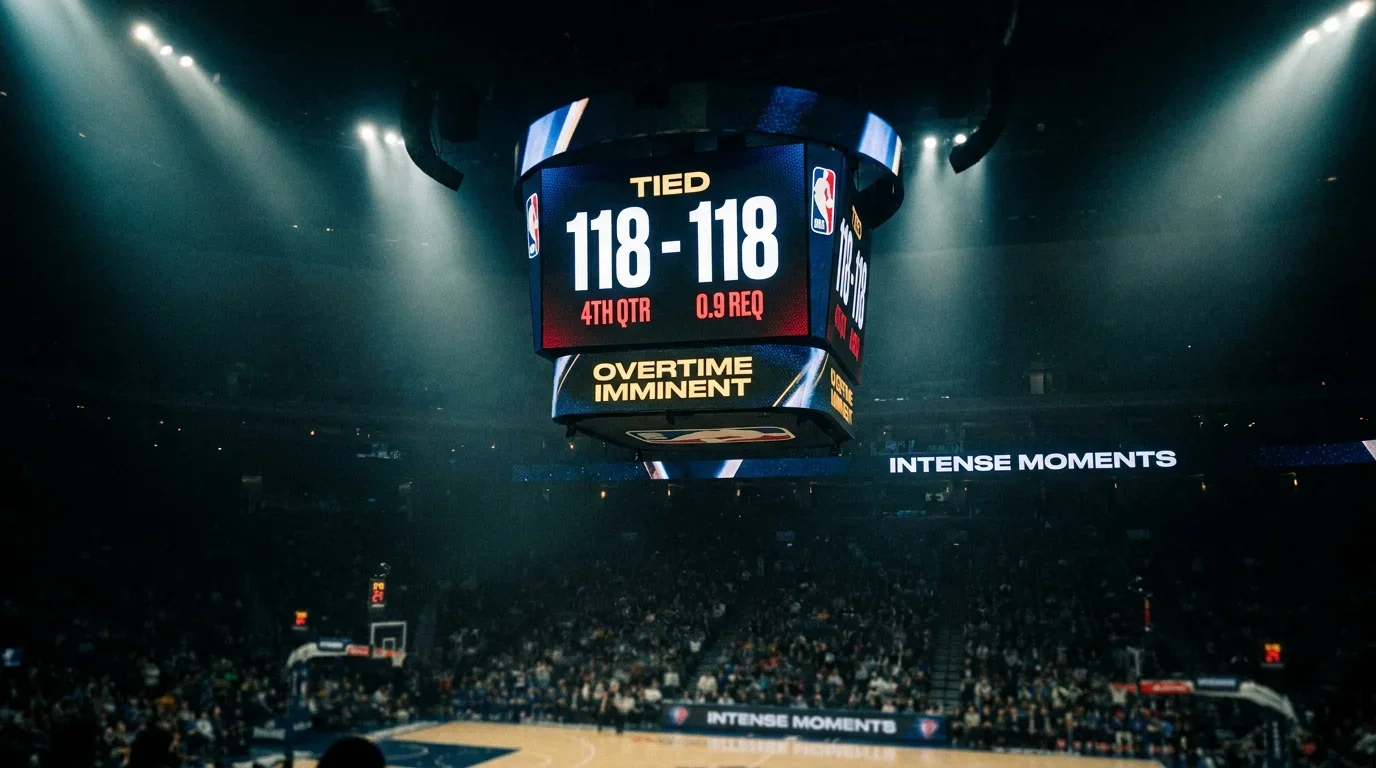
Donovan Mitchell scored 31 points through four quarters last month – my under 32.5 looked locked until the game went to overtime. He added 8 points in the extra period, finishing with 39 and destroying my bet. The frustration lingered for days. But that game also taught me something crucial about overtime: it doesn’t happen randomly, and understanding when it’s likely changes how you approach prop betting.
Roughly 6% of NBA games reach overtime. That might sound insignificant, but across a full season of betting, you’ll encounter overtime effects regularly. Every five-minute overtime period adds possessions that inflate statistics across the board – more shots, more rebounds, more assists, more everything. Your under bet loses not because the player performed unexpectedly, but because he got extra time you didn’t account for.
The UK gambling industry generated £16.8 billion in gross gambling yield in 2025, with basketball contributing a growing share. Understanding overtime settlement rules at UK bookmakers protects your money from flowing entirely to the house.
How UK Bookmakers Handle Overtime
The standard rule at most UK bookmakers: overtime counts for player prop settlement. If a player scores 8 points in overtime, those points add to his total. If he grabs 4 rebounds, those count. The prop settles based on final statistics including all overtime periods played.
This differs from some game-specific markets. Certain spread and total bets settle based on regulation time only, excluding overtime. But player props almost universally include overtime unless specifically stated otherwise. Always verify settlement rules at your preferred bookmaker – don’t assume consistency across operators.
Double-overtime and triple-overtime games amplify the effect dramatically. A player might go from 24 points through regulation to 38 after two overtimes. These rare games swing prop outcomes more dramatically than any other factor. There’s no practical way to predict multiple overtimes, making them essentially random variance that affects betting results.
Live betting settlement during overtime follows different logic. Props offered during overtime typically cover only the overtime period itself, not the full game. A “fourth quarter and overtime” prop might combine those periods. Read the specific market description carefully before betting.
Statistical Inflation in Extra Periods
Each five-minute overtime period adds roughly 10% to available playing time. If a star averaged 36 minutes through regulation, he might play 41-43 minutes in a single-overtime game. That extra court time translates directly to additional statistics.
Scoring inflates most noticeably. Overtimes tend to feature high usage by star players because coaches prioritise winning over development or rotation. A player who might have rested in a blowout fourth quarter instead plays every overtime possession at maximum intensity.
Rebounds follow similar patterns. More shots – and more missed shots – mean more rebounding opportunities. Close games that reach overtime often feature tough defence, which produces lower shooting efficiency and more rebounds than blowouts decided early.
Assists can spike or collapse depending on overtime dynamics. If overtime features isolations and hero ball, assists drop. If teams execute half-court offence patiently, assists accumulate. The style of overtime play varies more than regulation basketball.
Defensive statistics add variance. Blocks and steals – already high-variance categories – become even less predictable when overtime extends opportunity windows. A player averaging 1.5 blocks might record 3 or 0 depending on overtime possessions.
Identifying Overtime Candidates
Not all games carry equal overtime risk. Certain matchups and situations produce close finishes more frequently than others, and recognising these patterns helps you account for overtime in prop analysis.
Games with tight spreads naturally carry higher overtime probability. A matchup with a 1.5-point spread is far more likely to reach overtime than one with a 12-point spread. When betting props in toss-up games, mentally add 5-10% to statistical expectations to account for potential extra periods.
Divisional rivalries and playoff-seeding games often feature maximum effort that produces close finishes. Teams fighting for playoff positioning in March and April play with intensity that leads to competitive games. These late-season contests reach overtime more frequently than meaningless early-season matchups.
Defensive matchups between elite teams produce lower-scoring games where single possessions decide outcomes. When two top-ten defences meet, expect a grinding contest that could easily reach overtime. Conversely, high-scoring affairs between weak defences often produce separation that prevents overtime.
Live betting statistics show 62.35% of online basketball betting happens in-play. That proportion reflects bettors adjusting as game flow reveals overtime likelihood. A tied game entering the fourth quarter screams overtime risk; factor that into any late prop bets.
Strategy Adjustments for Overtime Risk
When overtime probability is elevated, under bets face asymmetric risk. A player meeting his line in regulation loses the under if overtime materialises. Over bets, by contrast, benefit from extra opportunity. This asymmetry should influence which side you bet in close-game situations.
Consider player stamina and rotation patterns. Some stars play every overtime minute; others tire and cede possessions to fresher teammates. Knowing which players expand their role in crunch time versus those who fade helps predict overtime statistical distribution.
Same-game parlays involving multiple player props face compounded overtime effects. If overtime inflates every leg of your parlay, the cumulative effect might save or sink the entire bet. Close games either boost multiple overs simultaneously or crush multiple unders.
The simplest adjustment: avoid heavy under positions in games projecting as coin flips. When spreads sit at pick’em or under 2 points, the overtime risk on unders exceeds normal levels. Either bet overs in these spots or find alternative games with clearer separation.
Live Betting Around Overtime
As games approach potential overtime, live prop lines adjust to reflect extended playing time. A player with 22 points entering a tied fourth quarter might see his live over/under at 30.5 rather than the 26.5 it would be if his team led by 15. This adjustment reflects expected overtime opportunity.
The adjustment isn’t always accurate. Bookmakers use automated systems that might not perfectly capture specific player overtime tendencies. If you know a player consistently dominates overtime periods – or consistently fades – you might find value in live props that don’t reflect those patterns.
Betting just before overtime begins is usually too late. Lines have already adjusted for the extended time. The value window, if it exists, comes earlier – when the game looks headed for overtime but lines haven’t fully adjusted. This requires watching games closely rather than just checking scores.
The comprehensive framework in our basketball prop bets guide covers additional factors affecting prop outcomes. Overtime represents one variable among many, but it’s a variable that catches unprepared bettors repeatedly. Understanding it prevents unnecessary losses from games that simply run longer than expected.
Does overtime count for NBA player props?
At most UK bookmakers, overtime statistics count toward player prop settlement. If a player scores 8 points in overtime, those add to his total. This is the standard rule, though some specific markets or operators might differ. Always verify settlement rules at your preferred bookmaker rather than assuming consistency across all platforms.
How does overtime affect OVER/UNDER settlement?
Overtime inflates statistics across categories, benefiting over bets and hurting unders. Each five-minute overtime adds roughly 10% more playing time for stars, translating to additional points, rebounds, assists, and other stats. Games with tight spreads carry higher overtime risk, creating asymmetric exposure for under bettors in close matchups.
Published by the Basketball Prop Bets team.